If you are selling a horse or acreage property in Cave Creek, you already know it is not the same as listing a typical suburban home. Buyers are not just looking at square footage and finishes. They are also studying land use, horse setup, access, utilities, and whether the property truly supports the lifestyle they want. This guide will show you what matters most, what buyers will ask, and how to position your property with clarity and confidence. Let’s dive in.
Why Cave Creek horse properties stand apart
Cave Creek has a distinct identity shaped by open space, rural character, and equestrian use. The Town notes that many residential areas are in Desert Rural zoning, and ranching and horse possession are allowed on at least two contiguous acres in a DR zone. That means buyers often see these homes as both residential properties and lifestyle properties.
The setting adds real value to the conversation. Cave Creek maintains a trail network designed for hiking, biking, and horseback riding, with horse right-of-way on shared trails. Connections to Cave Creek Regional Park, Spur Cross Ranch Conservation Area, the Tonto National Forest, and the Maricopa Trail make trail access and usable outdoor space especially meaningful.
The market also supports a premium positioning, but not a casual one. Realtor.com’s June 2026 snapshot shows a median listing price of $1.2 million, 340 homes for sale, median days on market of 67, and a 98% sale-to-list ratio. In a market like this, horse acreage should be priced against true comparables, not treated like a standard tract-home listing.
Price the property by function
With horse properties, buyers are paying for more than a home. They may be paying for acreage, privacy, trail proximity, legal horse use, trailer access, and the way the land actually works day to day. That is why pricing should reflect both land value and functional value.
A property with usable turnout, a practical barn layout, and clear access can compete differently than one with similar square footage but weaker horse setup. In Cave Creek, where the buyer pool is more specialized, small details can affect perceived value more than they would in a conventional neighborhood sale. A tailored pricing strategy matters.
For sellers, this is where local market knowledge becomes important. Zillow places the average Cave Creek home value at $1,057,746, while Redfin reports a median sale price of $1.2 million and about $400 per square foot. Those numbers provide context, but they do not replace property-specific analysis for acreage and equestrian use.
Verify what you can legally market
Before your home goes live, confirm exactly what the property is and is not. One of the biggest seller mistakes is assuming a Cave Creek mailing address or ZIP code tells the whole story. The Town states that ZIP code 85331 can also include Carefree, Scottsdale, Phoenix, and unincorporated Maricopa County.
That matters because town rules and county rules can differ. If your listing describes the property as a horse property, horse facility, or something with commercial equestrian potential, that language should match the actual jurisdiction and allowed use. Accurate positioning helps buyers trust the listing from the start.
Private restrictions matter too. Cave Creek states that the Town does not enforce CC&Rs or deed restrictions, and those private restrictions can be more restrictive than zoning. So even if zoning appears horse-friendly, subdivision covenants may limit what buyers can actually do.
Check commercial equestrian claims carefully
If your property includes a barn, arena, boarding setup, or training features, be careful with commercial language. Maricopa County says some agricultural and equestrian uses may be allowed or exempt in rural zoning districts, but arenas, riding lessons, horse rentals, and staging for off-site trail rides are not exempt and may require a special use permit.
In other words, do not assume that existing improvements automatically create a legal commercial use. If you want to market a property as more than a private horse setup, verify the exact status first. This protects you and helps buyers make informed decisions.
Build a stronger listing packet
Horse and acreage buyers usually ask more questions before they schedule a visit. The more answers you can provide upfront, the easier it is for serious buyers to move forward. A well-prepared listing packet can save time and reduce uncertainty.
Cave Creek’s guidance on site and plot plans offers a useful framework. A site plan should show lot size and shape, structures, fences, garages, accessory structures, utilities, sewer, easements, and topography. For acreage property, that kind of visibility is often essential.
Useful documents may include:
- Recorded survey
- Plat or legal description
- Utility service information
- Easement records
- Well information, if applicable
- Septic or sewer documentation
- Any records supporting legal nonconforming use or agricultural exemption
Cave Creek also notes that the Town does not maintain private easement records, and boundary research should come from recorded surveys or a licensed land surveyor. If boundary lines, access points, or riding routes are part of the property’s value, clear documentation can make a major difference.
Answer utility questions before buyers ask
Utilities are a bigger topic on acreage than many sellers expect. In Cave Creek, sewer service is not available to all areas, and the Town says most residents have private on-site sewer systems. That means buyers will want a clear answer on whether the property is on septic or sewer.
Water source matters too. The Town says Cave Creek’s water supply comes from the Colorado River through the Central Arizona Project canal and that the Town currently uses surface water only, while many residents also operate private wells. On a horse property, buyers may care about water source not just for household use, but for livestock watering, wash racks, and outdoor maintenance.
If your property has a private well or septic system, gather records before listing. If it has a sewer connection, confirm that too. The easier you make this due diligence, the more comfortable out-of-area buyers will feel.
Prepare horse infrastructure for scrutiny
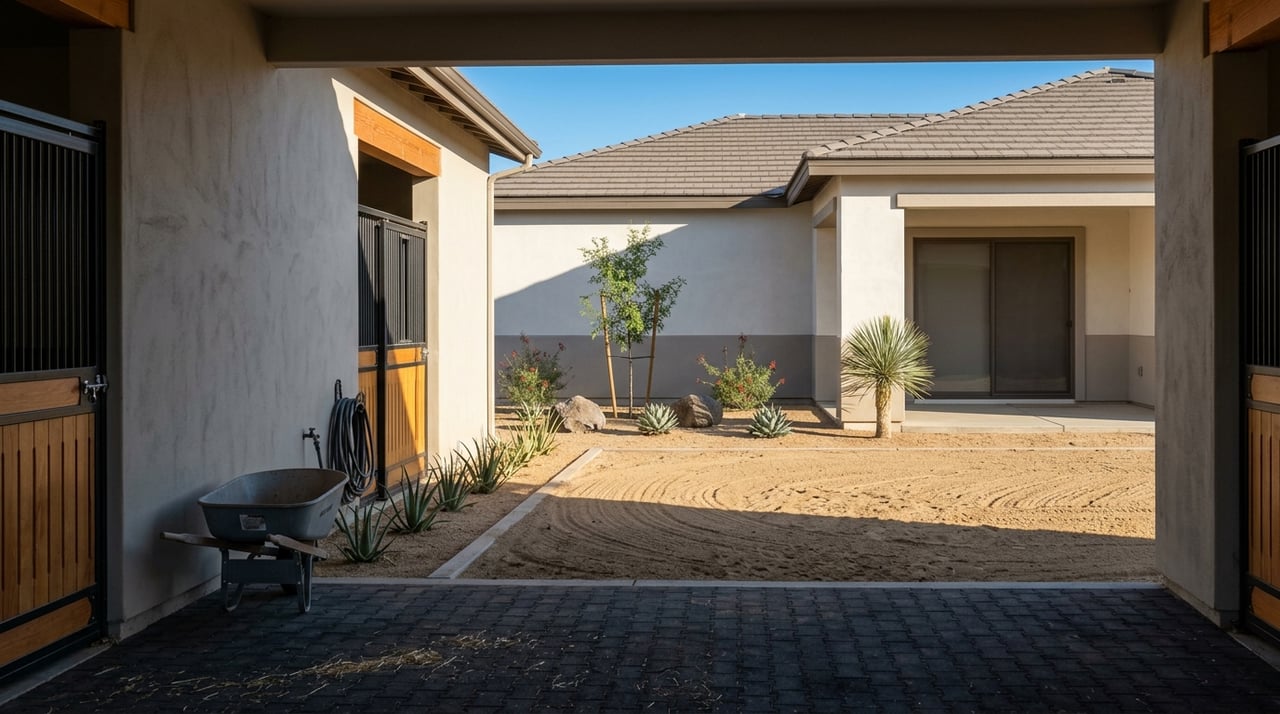
Acreage buyers tend to inspect the outside first and the house second. They notice corrals, barn flow, gate width, trailer access, footing condition, turnout layout, and how easy the property is to use on a daily basis. Presentation matters because function matters.
This does not always require major upgrades. Often, it means cleaning barns, organizing tack areas, trimming arena edges, defining turnout spaces, and making wash racks and storage areas look intentional. Buyers should be able to understand the setup quickly.
Compliance is also part of preparation. Maricopa County says corrals for unattended horses in residential zoning districts must be set back 40 feet from property lines and provide at least 1,200 square feet per horse area. The County also notes that fence permits and drainage clearances can be required depending on height and location.
If your horse setup has been in place for years, do not assume buyers will overlook unclear details. Clean records and clear answers build confidence. Uncertainty tends to slow down negotiations.
Highlight access, roads, and trailer usability
For many buyers, access is not a minor issue. It is a core part of whether the property works. Cave Creek warns that rural roads, private roads, trails, and washes can become impassable in extreme weather, and that drivers must share roads with hikers, cyclists, and horseback riders.
That makes practical access a key selling point. If your property has easy trailer maneuverability, good gate placement, usable turnaround space, or straightforward road access, show it clearly in photos and marketing remarks. If road maintenance responsibilities apply, be ready to explain them.
These details matter even more for relocation buyers. A person shopping from out of state may not understand local road conditions, wash crossings, or how trail traffic affects daily use. Good marketing fills in those gaps.
Use visuals that show the land
Standard listing photography is not enough for a specialty property. Buyers need to see how the acreage lays out, how structures relate to each other, and how the land functions. Aerial imagery, lot context, and layout visuals can help tell that story.
This is especially important in Cave Creek, where open space, trail connections, and topography shape value. A strong marketing package should help buyers understand the full property before they arrive. That is often what separates casual interest from serious inquiry.
For remote and site-unseen buyers, a digital due-diligence package can be especially effective. That may include survey information, utility details, septic or sewer status, well status if applicable, trail proximity, and any relevant documentation around legal horse use. The goal is simple: reduce guesswork.
Be honest about the setting
Cave Creek’s rural appeal is a major draw, but honest marketing still matters. The Town notes that open space is a significant amenity, while properties near Commercial Core zones may experience more noise and traffic. A good listing should describe the setting accurately rather than relying on vague lifestyle claims.
If your property offers privacy, usable land, and easy trail access, those are powerful advantages. If it is close to tourism activity or a busier roadway, buyers should know that too. Clear expectations lead to better showings and stronger offers.
Sellers should also pay attention to exterior details that affect buyer comfort. Cave Creek protects dark night skies through zoning, and the Town offers a free defensible-space evaluation to help reduce wildland-fire risk. On acreage, these are practical details that can support confidence during the selling process.
Why strategy matters more in niche sales
Horse and acreage listings usually attract a smaller, more focused buyer pool. That does not mean demand is weak. It means the marketing, pricing, and preparation need to be sharper. Buyers in this segment often move forward only after they understand how the property works legally and practically.
That is why the right approach is part valuation, part presentation, and part documentation. When your listing answers the important questions early, it becomes easier for qualified buyers to act. In a premium Cave Creek market, that can help your property stand out for the right reasons.
If you are thinking about selling a horse or acreage property in Cave Creek, working with a team that understands land, lifestyle, and buyer expectations can make the process much smoother. To start with a tailored strategy and a human-prepared valuation, connect with The Mitchell Group AZ.
FAQs
What makes selling a horse property in Cave Creek different from selling a standard home?
- Horse properties in Cave Creek are often evaluated based on land use, horse setup, trail access, utilities, and legal use rights, not just the home itself.
What should sellers verify before marketing a Cave Creek property as a horse property?
- You should verify the jurisdiction, zoning, and any CC&Rs or deed restrictions, since private restrictions can be more limiting than zoning.
What utility information do buyers want for Cave Creek acreage homes?
- Buyers usually want clear documentation on water source, well status if applicable, and whether the property uses septic or sewer.
Can sellers market a Cave Creek horse property as a commercial equestrian facility?
- Not without verifying the legal use first, because some activities may require a special use permit under Maricopa County rules.
What documents help sell a Cave Creek acreage property faster?
- A recorded survey, legal description, utility information, easement records, and septic, sewer, or well documentation can help buyers understand the property more quickly.