You do not have to build a resort-style backyard to make a Phoenix home feel more appealing. In a market shaped by intense sun, long hot summers, and limited rainfall, the most effective outdoor upgrades are often the ones that make your space easier to use and easier to maintain. If you are thinking about future resale or simply want to enjoy your home more right now, these Phoenix-friendly ideas can help you focus on what matters most. Let’s dive in.
Why outdoor living matters in Phoenix
Outdoor space plays a different role in Phoenix than it does in many other parts of the country. According to NOAA climate normals for Phoenix Sky Harbor, the annual mean temperature is 75.6°F, and average daily high temperatures reach 104.2°F in June, 106.5°F in July, and 105.1°F in August. The City of Phoenix also notes that temperatures reach or exceed 100°F for about 90 days each year.
That kind of heat changes how buyers and homeowners think about a yard. A backyard is not just extra space. It is part of how you live at home, entertain guests, and create comfort during much of the year.
Water use is also a major part of the conversation. Phoenix Water Services says up to 70% of household water use is outdoors, which makes landscaping decisions especially important for long-term upkeep, efficiency, and cost. In this climate, practical outdoor design tends to stand out.
Focus on function first
In Phoenix, the best outdoor upgrades usually solve local problems before they add visual flair. Heat, sun exposure, water demand, and maintenance all shape what feels useful and finished in a backyard.
That means you do not need to chase trends that look great in cooler or wetter climates. Instead, you can get more value from improvements that help your outdoor space feel shaded, durable, and well suited to the desert.
Add shade with covered patios
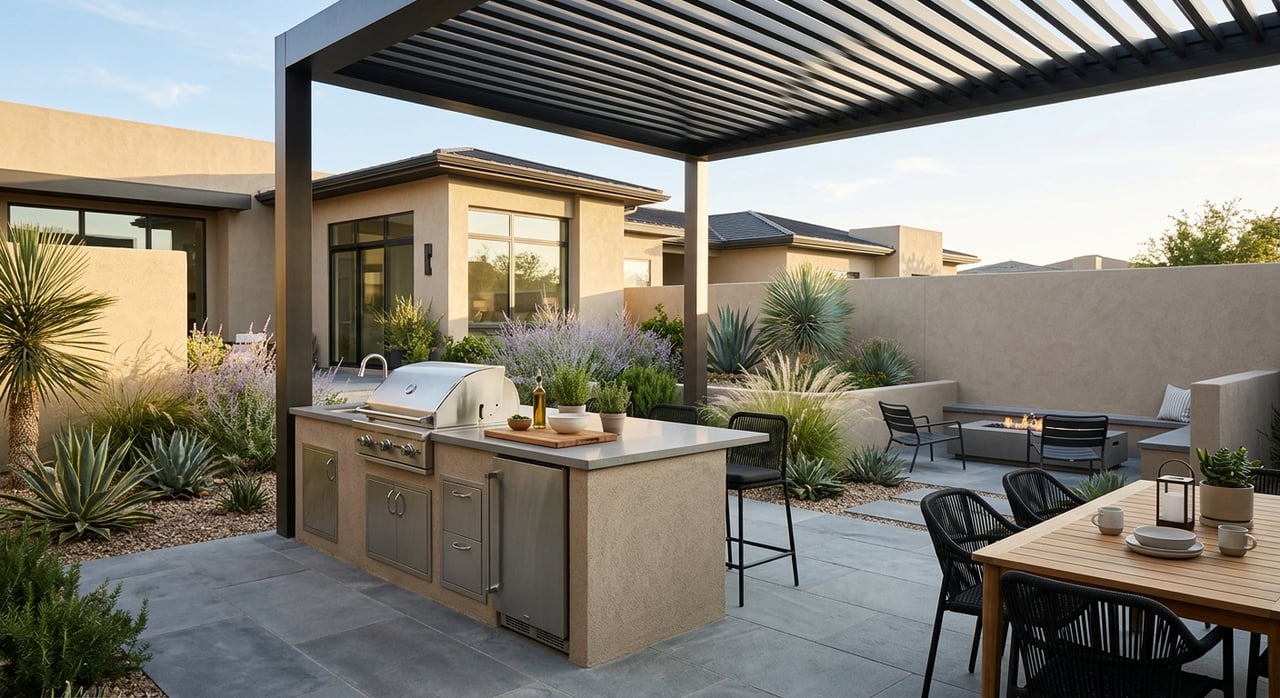
If there is one outdoor feature that makes an immediate difference in Phoenix, it is shade. When summer highs regularly push well above 100°F, a covered patio or shade structure can turn a rarely used yard into a more livable extension of the home.
A shaded patio can make outdoor dining, lounging, or hosting more realistic during warm months. It also helps your yard photograph better, because the space feels intentional and usable rather than exposed and empty.
The City of Phoenix defines a patio cover as a one-story structure, no more than 12 feet high, attached to the residence, open on two or more sides, and intended for recreational and outdoor living use. The city also states that patio covers require permits, plan review fees, and a final inspection before the project is legally complete.
What to keep in mind with patio covers
Before starting a project, it helps to think through both design and process.
- Prioritize shade where you will actually spend time
- Choose materials that fit Phoenix heat and sun exposure
- Confirm city permit requirements before construction begins
- Make sure the final inspection is completed
The City of Phoenix also lists patio covers, porch enclosures, and fences or walls among residential projects that require permits and inspections. If you are making changes before a future sale, having completed paperwork and final approvals can help reduce stress later.
Choose desert-friendly landscaping
In Phoenix, a polished yard does not have to mean grass and heavy irrigation. In fact, the City of Phoenix encourages desert landscaping that uses low-water-use, desert-friendly plants adapted to hard soil and infrequent rainfall.
This kind of landscaping can improve appearance while also making maintenance more manageable. Native and low-water-use plants are better aligned with local conditions, and the city notes they can save water, money, and time.
For many homeowners, this is one of the most practical upgrades available. A finished desert landscape can look clean and intentional while reducing the ongoing work that often comes with higher-water designs.
Grass removal may also reduce water use
Phoenix’s Residential Grass Removal Program currently offers $2 per square foot for eligible projects. The city also says replacing grass with desert plants can lower outdoor water use by 85% compared with grass, while reducing landscape maintenance.
That does not mean every home should remove every patch of grass. It does mean that low-water landscaping is not just a design trend in Phoenix. It is closely tied to how the city approaches water conservation and long-term outdoor efficiency.
HOA rules still matter
If your home is in an HOA community, check private rules before making visible landscape changes. The city’s grass removal incentive specifically requires compliance with HOA covenants, codes, and restrictions.
That step is easy to overlook, especially when you are focused on design decisions. A quick review up front can help you avoid delays or costly revisions later.
Use shade trees strategically
Trees can play an important role in Phoenix yards when they are selected with the local environment in mind. City guidance says native-Arizona plants and low-water-use varieties are adapted to Phoenix conditions and can help homeowners save water, money, and time.
The city also notes that many plants fail because they are not well suited to local conditions. That makes plant selection just as important as layout.
A well-placed tree can support shade and improve comfort over time, but the bigger point is fit. In Phoenix, buyers often respond well to landscaping that looks established, sensible, and matched to the desert climate rather than forced against it.
Create easy outdoor entertaining areas
Not every upgrade needs to be structural. Sometimes the most appealing change is simply giving the yard a clear purpose.
A defined grilling area, outdoor dining setup, or lounge space can help buyers picture how they would use the home. In Phoenix, those spaces tend to work best when they are shaded, durable, and simple to maintain.
This kind of outdoor room can also improve your enjoyment before you ever think about selling. In the 2025 Remodeling Impact Report for Outdoor Features, 60% of owners reported increased enjoyment after completing an outdoor project, and 68% said they had a greater desire to be in their home.
Curb appeal still counts
The same report found that 92% of REALTORS® recommend curb appeal improvements before listing, while 97% believe curb appeal is important to attracting a buyer and 98% believe it matters to a potential buyer.
Even though those findings are not Phoenix-specific, they support something local homeowners already know. A home that looks cared for from the outside often creates a stronger first impression, and in Phoenix that includes the front and back outdoor spaces.
Think carefully about pools and spas
Pools are a natural part of the Phoenix lifestyle conversation. With summer temperatures regularly above 100°F, a pool can be an enjoyable feature that fits the climate well.
Still, it is important to look at a pool as both a lifestyle choice and a responsibility. The City of Phoenix treats residential pools as regulated projects with permit requirements, and the city provides a separate pool and spa permit process.
Pool projects also come with safety obligations. City policy states that all pools, spas, and hot tubs must have barriers installed and maintained, and that all pools in Phoenix require exterior fencing. Most also require an interior barrier, with a non-climbable fence or wall at least five feet high and self-closing, self-latching gates.
When a pool makes sense
A pool can be a strong personal-use upgrade if you know you will enjoy it and are comfortable with the added upkeep. It may also help a home feel aligned with buyer expectations in some parts of the Valley, but it should not be framed as a guaranteed return.
The better approach is to weigh the benefits honestly.
- Fits Phoenix’s hot-weather lifestyle
- Can increase day-to-day enjoyment at home
- Requires permits and code compliance
- Adds ongoing water, maintenance, and safety responsibilities
Talk about resale the right way
It is tempting to ask which outdoor project gives the biggest payoff. In reality, the safest answer is that it depends.
According to the NAR Remodeling Impact Report, cost recovery varies based on project design, material quality, location, the age and condition of the home, and homeowner preferences. That is why broad promises about return on investment can be misleading.
In Phoenix, stronger resale language usually centers on appeal rather than guarantees. A shaded patio, finished desert landscaping, or clean outdoor entertaining space may help your home show better in photos, feel easier to maintain, and appear more usable in hot weather.
That kind of appeal matters, especially when buyers are comparing several homes online before they ever step through the door. Often, the best upgrades are the ones you enjoy now and that also help your home present well later.
Plan projects with Phoenix rules in mind
Before you start construction, confirm what the City of Phoenix requires for your specific project. The city’s residential building information states that construction permits are required for remodels and additions such as patio covers, fences or walls, porch enclosures, and other home improvement projects.
The city also notes that many permitted residential jobs require inspections. For patio covers, final inspection is required before the project is legally complete.
Phoenix also approved the 2024 Phoenix Building Construction Code on June 18, 2025, with an effective date of August 1, 2025. That makes current city guidance especially important if you are relying on older project advice from friends, contractors, or online sources.
The best Phoenix outdoor upgrades solve Phoenix problems
If you are deciding where to spend money outside, start with what makes daily life better in this climate. Shade, low-water landscaping, and easy-to-use outdoor living areas usually make more sense in Phoenix than high-maintenance features that fight the environment.
That does not mean every home needs the same checklist. It means the smartest upgrades are usually the ones that feel natural here, support everyday comfort, and help your property look finished without overcomplicating ownership.
If you are preparing to sell, or simply want a clearer sense of which improvements may strengthen your home’s appeal in today’s market, The Mitchell Group AZ can help you think through the options with local insight and a practical plan.
FAQs
What outdoor upgrades add the most appeal to Phoenix homes?
- In Phoenix, the most appealing upgrades are often covered patios, shade features, desert-friendly landscaping, and simple outdoor entertaining spaces that feel usable in hot weather.
Do Phoenix patio covers require a permit?
- Yes. The City of Phoenix says patio covers are permit-required projects, and the work is not legally complete until the final inspection is approved.
Is desert landscaping a smart choice for Phoenix homeowners?
- Yes. The City of Phoenix promotes desert landscaping because low-water-use, desert-friendly plants can save water, money, and maintenance compared with higher-water landscapes.
Can removing grass lower water use at a Phoenix home?
- Yes. The City of Phoenix says replacing grass with desert plants can lower outdoor water use by 85% compared with grass, and its Residential Grass Removal Program currently offers $2 per square foot for eligible projects.
Are HOA rules important for Phoenix landscape upgrades?
- Yes. If your home is in an HOA, you should check its covenants, codes, and restrictions before making landscape changes, since city incentive programs also require HOA compliance.
Do pools need special safety features in Phoenix?
- Yes. The City of Phoenix says pools, spas, and hot tubs must have barriers installed and maintained, including exterior fencing and, in most cases, an interior barrier with self-closing and self-latching gates.