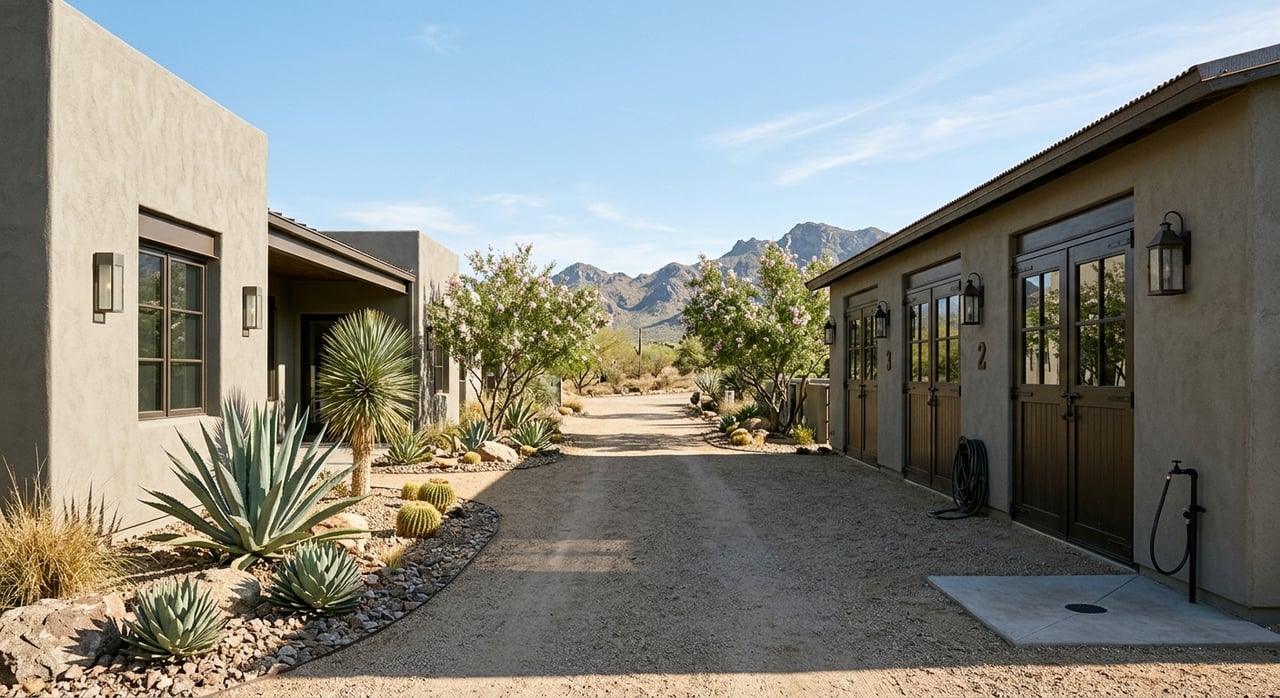
Looking for a horse property in Cave Creek can feel exciting and a little tricky at the same time. A home may look perfect at first glance, but the real value for an equestrian buyer comes down to zoning, access, water, layout, and trail connections. If you want a property that truly supports your horses and your day-to-day routine, this guide will help you know what to check before you buy. Let’s dive in.
Why Cave Creek Appeals to Horse Buyers
Cave Creek has a strong equestrian identity, and that starts with access to trails and open space. The Town maintains trail connections to the Town Core, Spur Cross Ranch Conservation Area, Cave Creek Regional Park, Tonto National Forest, and Desert Foothills Land Trust properties. Town trails are for non-motorized use only, and horses have the right-of-way on town trails.
That trail network adds real lifestyle value if you want to ride close to home. Cave Creek Regional Park offers more than 11 miles of shared-use trails and a horse staging area. Spur Cross Ranch Conservation Area offers more than 12 miles of trails, also with a horse staging area, and it connects to the Maricopa Trail and Tonto National Forest.
Still, open land nearby does not always mean you can ride there freely. Some areas border state trust land, and recreational use of that land requires a permit from the Arizona State Land Department. That is why buyers should verify access instead of assuming a nearby desert view equals usable riding space.
Start With Zoning First
If you are buying horse-friendly property in Cave Creek, zoning should be one of your first checks. The Town’s buyer guidance ties ranching and the keeping of horses or other livestock to parcels with at least two contiguous acres in a Desert Rural, or DR, zone. The Town glossary also classifies horses as large ranch animals.
That matters because not every rural-looking property is actually set up for horse use under current rules. Smaller DR, R, and MR parcels may be limited to small ranch animals. In other words, a property can feel horse-oriented but still fall short of what you need legally.
What private horse use may allow
Private ranch uses are allowed on sites with at least two contiguous acres under single ownership. Those uses can include boarding, breeding, equine training, equine lessons, the sale of ranch animals, and 4H or other youth-related activities.
Private ranch use also has clear limits. It does not include dairies, liveries, retail hay, feed, or tack sales, livestock sale barns, or equine activities open to the general public. If your plans go beyond personal use, you will want to review those distinctions carefully.
When commercial use changes the rules
Commercial ranch use follows a different standard. It requires at least five contiguous acres and special-use approval. It can include features like riding arenas used for scheduled public or club events, but it also comes with added requirements for road access, manure handling, fly control, dust control, and parking.
For many buyers, this is the point where goals need to match the property from day one. If you only want a few personal horses, your path may be simpler. If you want public-facing equestrian use, your due diligence needs to be much more detailed.
Check Improvements and Setbacks
A horse property is more than acreage. You also need to know whether the parcel can support the improvements you want, where you want them.
In Cave Creek, barns, corrals, horse shades, and other private ranch uses tied to residential horse keeping are restricted to Desert Rural zones. In those DR zones, all fences, including corral fences, must be set back at least 12 feet from property lines. Horse trailers are also treated as an accessory use in DR zones.
Fence and wall work needs extra attention. In Cave Creek, no fence, wall, or gate may be built without zoning clearance, and taller fences or walls may also require a building permit. If you are planning perimeter fencing, cross-fencing, or arena fencing, confirm that process before closing so there are no surprises later.
Look Closely at the Land Itself
A parcel can meet zoning rules and still be hard to use well for horses. That is why the site itself matters just as much as the legal use.
Parcel shape and buildable area play a big role in how the property functions. Lot disturbance rules can affect where you place a house, barn, driveway, septic system, corrals, and parking. In practical terms, you want enough usable and relatively flat space for the layout you have in mind.
Access and trailer movement matter
Many rural properties in Cave Creek rely on private roads. The Town also notes that roads and washes can become impassable in extreme weather, so access should be reviewed with your everyday needs in mind.
This is especially important if you plan to haul horses in and out often. Narrow roads, tight turns, and steep driveways can create issues for trailers, deliveries, and future construction. The Town’s zoning glossary defines legal access as a continuous easement or right-of-way at least 20 feet wide, which gives buyers a useful standard to confirm.
Drainage, washes, and floodplain issues
Desert properties require careful drainage review. Cave Creek warns that building near a dry wash can redirect runoff through the property, which can affect barns, paddocks, driveways, and turnout areas.
Some sites may also require geotechnical review before building, driveway, or septic permits are issued. If the property is in a floodplain, Maricopa County requires a floodplain use permit before building, grading, filling, installing fences or walls, or making other man-made changes. That makes drainage and site planning essential for horse buyers.
Fire planning is part of horse-property planning
Rural desert living comes with wildfire exposure, and that matters even more when hay, bedding, or other combustible materials may be stored on site. Cave Creek offers a free defensible-space evaluation for property owners.
For horse owners, this is not just a home safety issue. It is also part of planning how your barn area, storage, and access routes work together in a real emergency.
Verify Water and Utility Capacity
Water is one of the most important questions on any horse property. In Cave Creek, the Town water system is served by CAP water, while the Desert Hills system relies on groundwater wells and supplemental CAP water. The Town also notes that many residents in the area use private wells.
If a new well is needed, the Arizona Department of Water Resources requires a Notice of Intent to Drill before drilling or modifying a well. That is a key item to understand early if you are looking at vacant land or a property with future expansion plans.
Sewer service is not available in all parts of Cave Creek, so some properties use on-site wastewater systems. In Maricopa County, a property with a septic system must be inspected within six months before ownership transfer, and the buyer must file a Notice of Transfer within 15 calendar days after closing.
For equestrian use, utility review should also be practical. You will want to think about hose bib locations, trough placement, wash-stall drainage, water pressure, irrigation, and whether the property’s water source can support animals through the hottest months of the year.
If utility lines or a shared well cross another parcel, verify the recorded easements before you close. Cave Creek’s buyer guidance notes that easements can control both roads and utility service, and that title and survey review are especially important in rural settings.
Don’t Assume Trail Access
Trail access is one of the biggest reasons buyers choose Cave Creek, but it is also one of the easiest things to misunderstand. A property near open space may or may not have direct, legal, convenient riding access.
Before you buy, verify whether the nearby trail is public, private, or located on state trust land. Also check whether the parcel has recorded easements or documented trail access rights. Cave Creek’s trail materials describe trails and pathways as non-motorized easements, trailheads, and staging areas, which makes paperwork just as important as proximity.
Your Due Diligence Checklist
Before you make an offer on a horse property in Cave Creek, it helps to review the basics in a clear order:
- Confirm the zoning and parcel size
- Verify whether your intended horse use is allowed by right or needs special-use approval
- Review the title report, survey, recorded plats, CC&Rs, and any HOA rules
- Check boundary locations and easements carefully
- Confirm legal access, including road width and trailer usability
- Ask about water source, septic, and utility easements
- Evaluate drainage, washes, floodplain status, and usable flat area
- Review fencing, corral, barn, and trailer plans against local setbacks and permit requirements
- Verify actual trail access rather than assuming it
The goal is simple. You want the acreage, zoning, access, drainage, utilities, and riding lifestyle to work together. In Cave Creek, the best horse property is usually the one that supports how you plan to live with your horses, not just the one that looks the part from the street.
If you are comparing horse properties in Cave Creek, local guidance can make a big difference. The right support can help you look past the home’s first impression and focus on whether the parcel truly fits your goals. When you are ready to explore your options, connect with The Mitchell Group AZ for knowledgeable, relationship-first help in Cave Creek and the greater Phoenix area.
FAQs
What zoning should you look for when buying horse property in Cave Creek?
- In Cave Creek, buyers should closely review Desert Rural zoning because the Town’s guidance ties horse keeping and ranching to parcels with at least two contiguous acres in a DR zone.
What should you verify about trail access on a Cave Creek horse property?
- You should verify whether nearby riding access is public, private, or on state trust land, and confirm any recorded trail easements or access rights tied to the parcel.
What property features matter most for horse use in Cave Creek?
- Buyers should focus on usable flat space, drainage, legal access, trailer maneuvering room, water availability, septic or sewer setup, and whether the site can support barns, corrals, fencing, and parking.
What should you know about septic systems on Cave Creek horse properties?
- In Maricopa County, a property with a septic system must be inspected within six months before transfer of ownership, and the buyer must file a Notice of Transfer within 15 calendar days after closing.
What is the difference between private and commercial horse use in Cave Creek?
- Private ranch use may be allowed on at least two contiguous acres under single ownership, while commercial ranch use requires at least five contiguous acres and special-use approval, along with added operational requirements.